Deciphering the Brain Mechanisms of Stress Resilience
Resilience refers to the capacity that human beings have to preserve their mental health when exposed to a stressful or traumatic experience. Resilience is a dynamic and continuous process in our lives; it makes our behavior and emotions more flexible, increasing our capacity to adapt to a diversity of adverse scenarios that are part of life.
The main objective of our laboratory is to understand the brain mechanisms of resilience; we use different experimental approaches in animal models and research in humans. We have a new perspective on the origin of stress-related mental illnesses, such as depressive and anxiety disorders. When the brain loses its capacity for resilience, the risk of developing mental illness increases. Therefore, modulating resilience will help prevent the development of mental illness and improve the effectiveness of current treatments.
We use several laboratory techniques in our research:
Behavior and in vivo electrophysiological recordings: This technology makes it possible to study, during behavior, the dynamics of the activity of neuron populations that regulate emotions. This way, it is possible to understand how these neural networks are affected as specific behaviors develop in animal models of psychiatric disorders. For example, we can understand in these animal models how the neural circuits that regulate mood are affected as depressive- and anxiety-like behavior develops.

Animal Models of Stress:
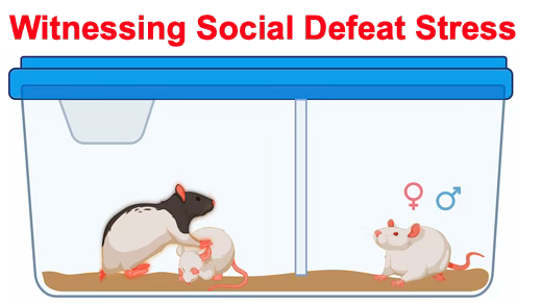
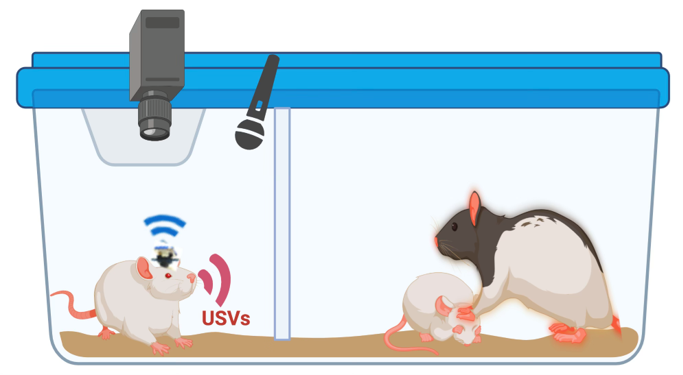
Our laboratory has specialized in developing several animal models to study the neurobiological basis of stress resilience in females and males, such as observational stress based on emotional contagion.
Ultrasonic Vocalizations (USVs):
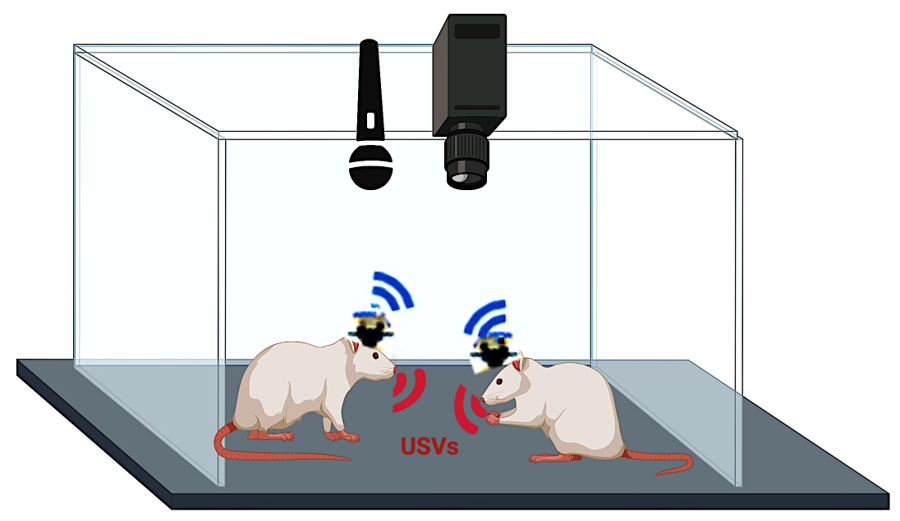
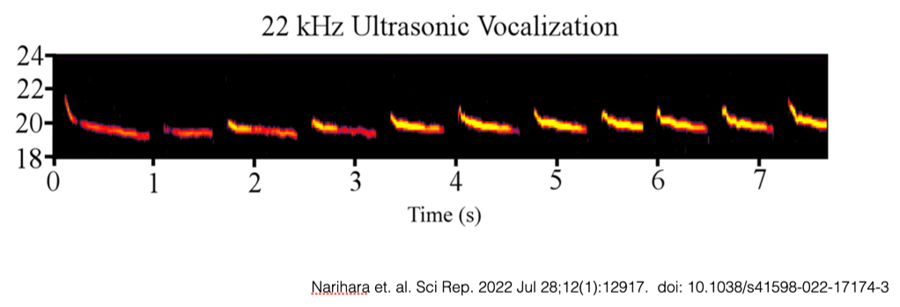
Rodents emit ultrasonic vocalizations, through which they express their emotional states. The vocal cords receive input from the sympathetic nervous system, and under stress they tense up, generating vocalizations within specific frequency ranges (22 kHz). This is a non-invasive measurement of stress physiology that we have synchronized with our wireless electrophysiological recording system.
Behaviors used to analyze stress resilience in rodents:
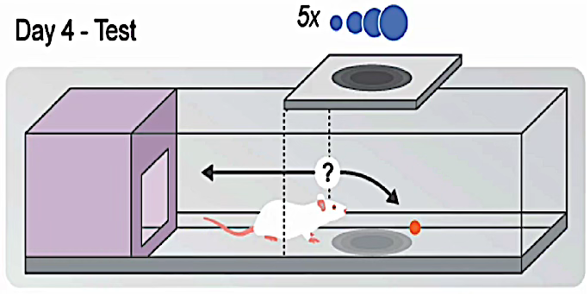
1) Coping with stress:
Looming Shadow Test
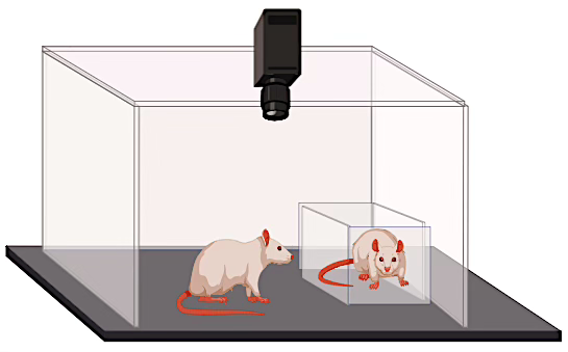
2) Social Behavior:
Social Preference Avoidance Test (SPAT)
Neuropharmacology with Alzet Pumps:
This technology allows drugs to be applied chronically in the brain and to analyze their effects over time, specifically at the level of the central nervous system.

ELISA: We quantify stress hormones (corticosterone and ACTH) in plasma samples.

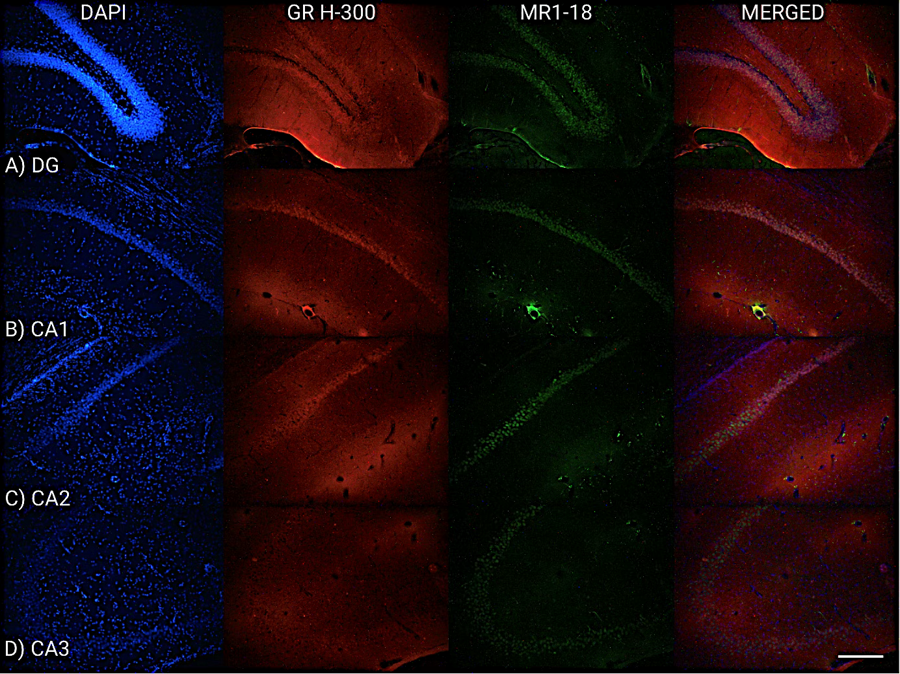
Immunofluorescence for Stress Hormone Receptors:
We study the balance of glucocorticoid (GR) and mineralocorticoid (MR) receptors, as well as the FKBP5 chaperone.
Epigenetics:
We study microRNAs of glucocorticoid and mineralocorticoid receptors related to stress resilience.
Every day we are exposed to a variety of dangers and threats that significantly affect brain physiology. The set of biological reactions associated with the process of adapting to these threats is known as stress. In this context, there are two types of stress: a positive one, called eustress, associated with environmental changes or controllable stressors; and a negative one, called distress or chronic stress, associated with uncontrollable and long-lasting stressors. Chronic stress significantly impairs the brain, affecting memory and emotional processing. These alterations are a very important risk factor in the development of depressive and anxiety disorders.
stress video1 from Stress on Vimeo.