


 Our
Team
Laboratory of Behavior
Our
Team
Laboratory of Behavior





Welcome to our Lab
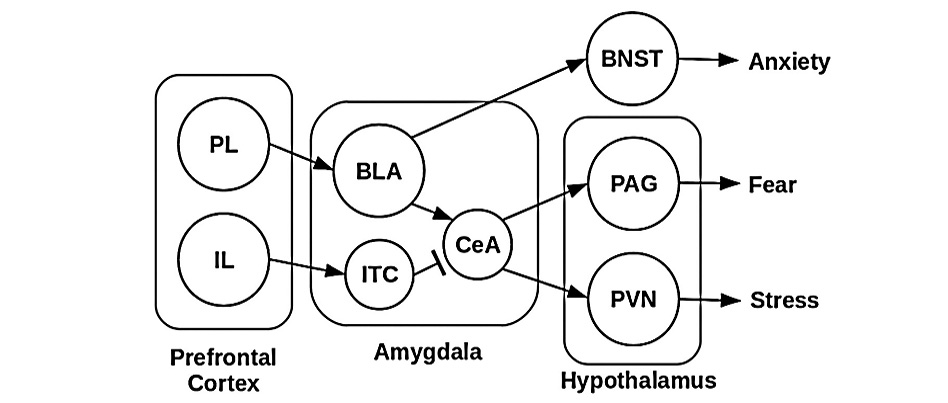
How does stress that we feel daily impair the brain and induce depressive disorders?. This is the question that motivates the research in our laboratory. We hypothesize that etiology of depressive and anxiety disorders is related to alterations in the brain lipid metabolism. More specifically, we think that chronic stress affects the ratio of PUFAs n-6/n-3 in the membrane of neural cells, as result several negative effects are developed in the brain.
Our main evidence is that supplementations with PUFA n-3 have anti-stress and anxiolytic effects in rats (Pérez et al., 2013).
We use a number of animal models and technical approximations in our research at prenatal level as well as during childhood and adulthood.
We have developed new anti-stress and antidepressant therapies, at preclinical level, by essential fatty acid supplements.
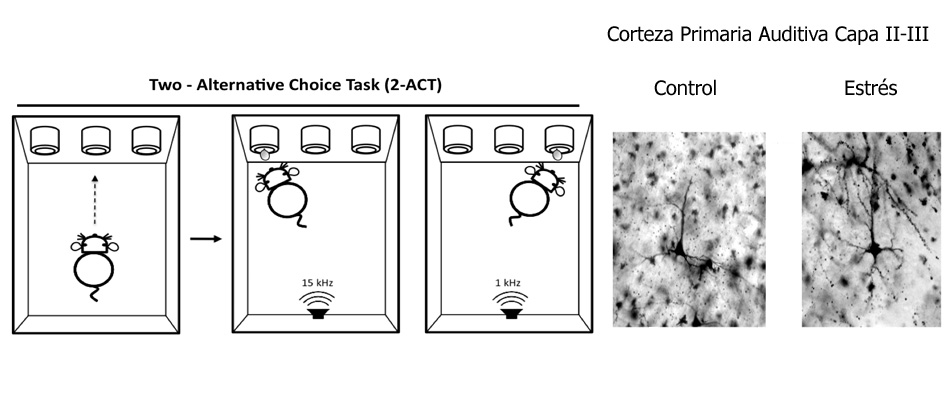
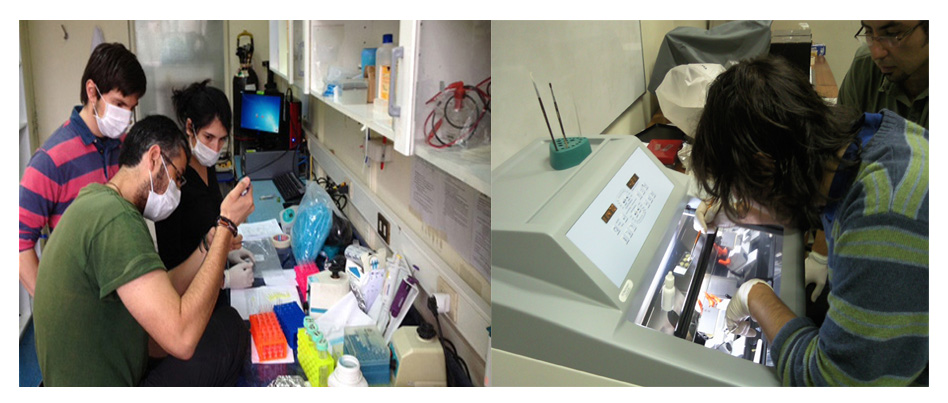
We use numerous technical approaches in our research: 1. Behavior and in vivo electrophysiological recording in behaving rats: we measure the neuronal activity (LFP) in areas of the limbic system when rats are performing specific behaviors related to anhedonia, anxiety, auditory attention, or when the animal evokes an emotional memory (fear conditioning). We have a wireless system for in vivo recording that we have synchronized with behavioral software (Any-maze y Packwin). 2. Animal models (rats): chronic stress, prenatal stress and depressive-like behaviors in childhood and adulthood (CUS), post partum depression.
3. ELISA: Quantification of stress hormones (cortisol and ACTH). 4. Microscopy: immunofluorescence, IHQ, neuronal morphology. 5. Molecular biology: RT-PCR. What is stress? Hans Selye, an Austro-Hungarian researcher, introduced the concept of stress which he defined as a nonspecific biological response of an organism to any pressure or demand from the environment. Stress is oriented to restore homeostasis and to adapt to environment pressure (stressor). Stress can be positive (eustress) when the stressors are mild, brief and controllable. Strong, persistent, and uncontrollable stressor may lead to a maladaptive response (distress). Chronic stress or distress impairs the brain and affect memory and the emotional processing. These alterations are a risk factor to develop depressive and anxiety disorders.